 la
What are granola bites? A plain-English guide
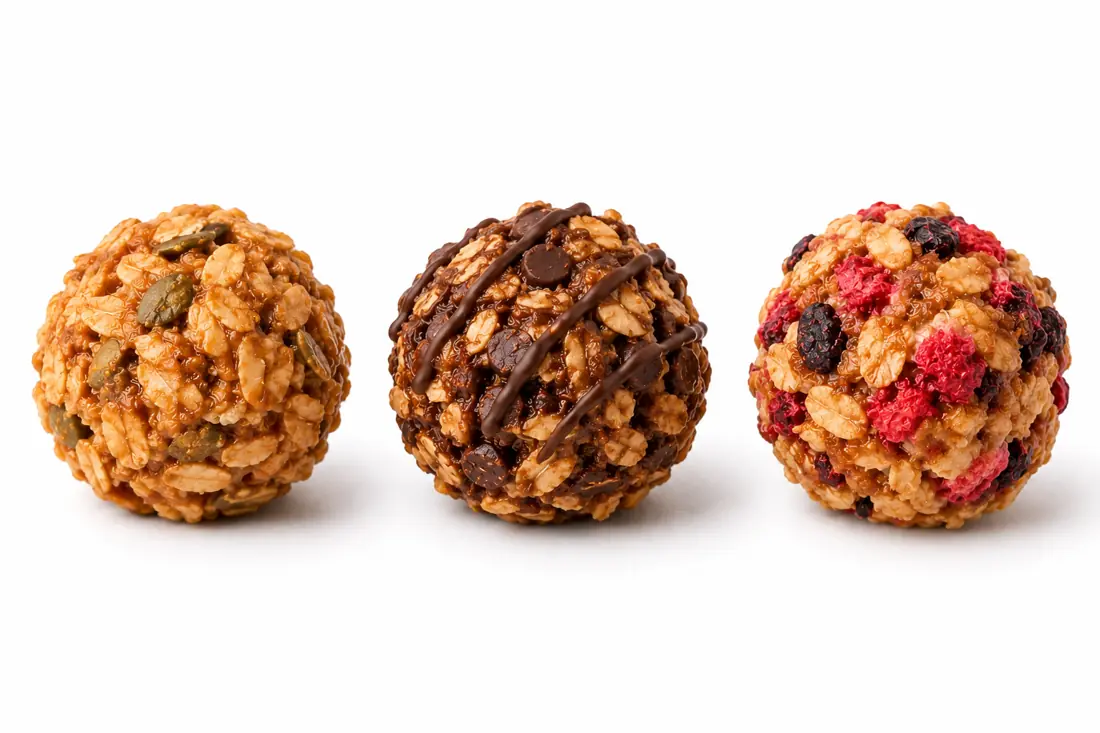
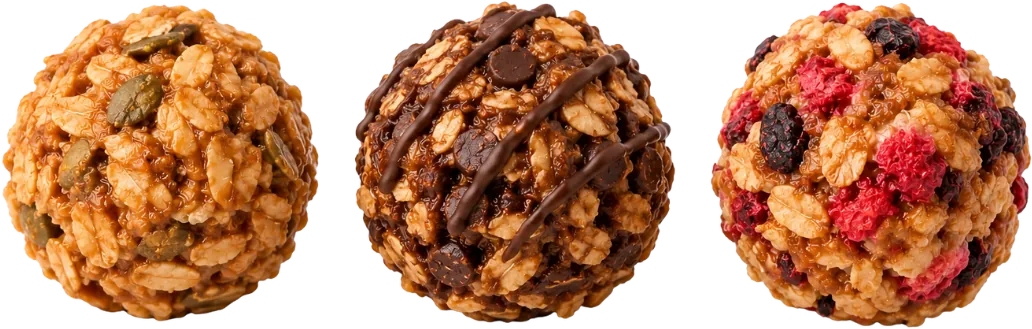
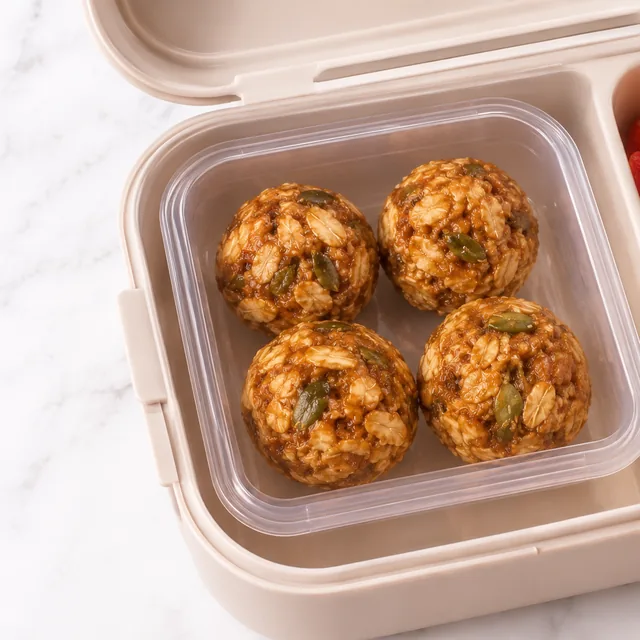
Granola bites are small, round snacks made from rolled oats bound together with something sticky, usually nut butter and honey or dates. They take the crunchy clusters from a bowl of granola and press them into a portable ball. Most are eaten straight from the bag, with three or four balls making a serve.
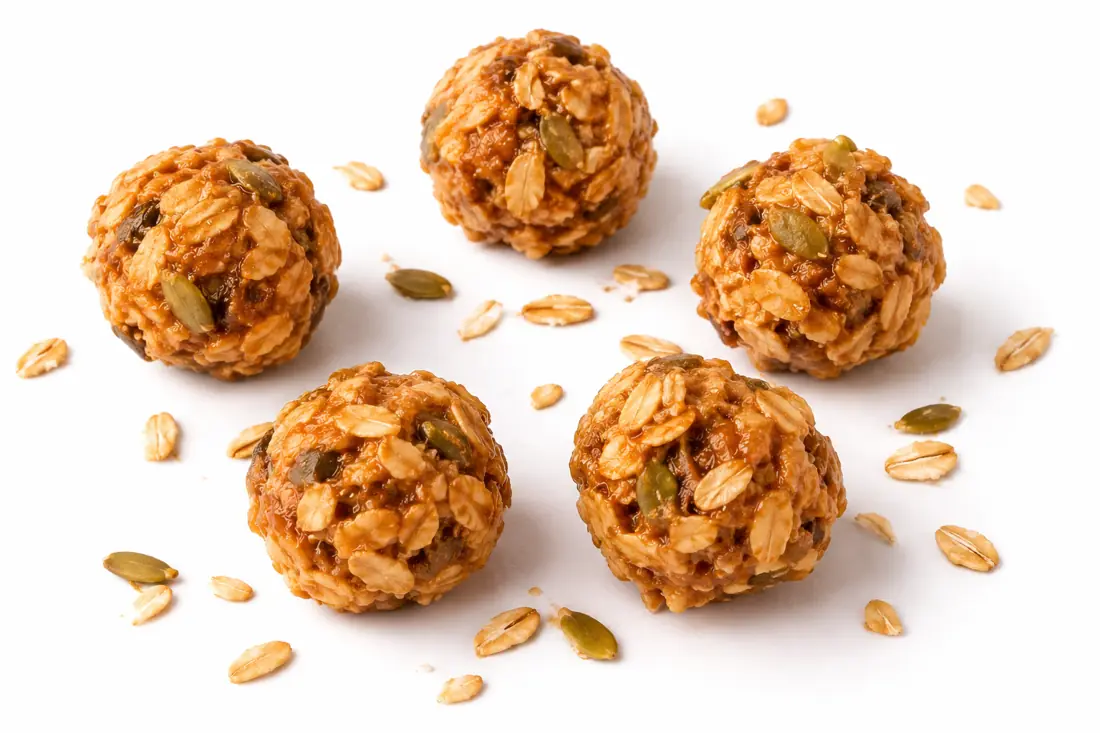
If you have ever eaten a bowl of granola and picked out the crunchy clumps first, you already understand the idea. Granola bites, also called granola balls or oat bites, are made entirely of those clumps. Instead of loose cereal that needs milk and a spoon, you get a firm little ball you can eat with your fingers on the way out the door.
What goes into a granola bite?
Almost every granola bite is built from the same three parts. The base is rolled oats, which give the bite its body and its chew. The binder holds everything together; this is usually a nut butter such as peanut or almond, plus a liquid sweetener such as honey, maple syrup or blended dates. The mix-ins give each flavour its personality: seeds like pepitas and chia, dark chocolate, dried or freeze-dried fruit, coconut or spices.
Some brands add a protein powder, most often whey or a plant protein, to lift the protein content. Others add oils, syrups and flavourings to make the mix easier to shape in a factory. That difference is where the quality gap between brands opens up, so the ingredients list matters more than the front of the pack.
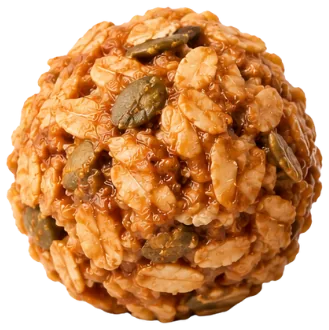
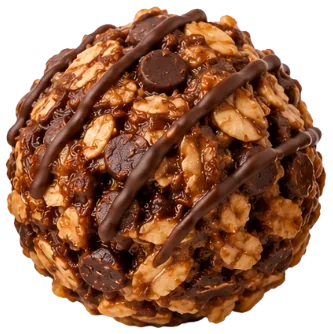
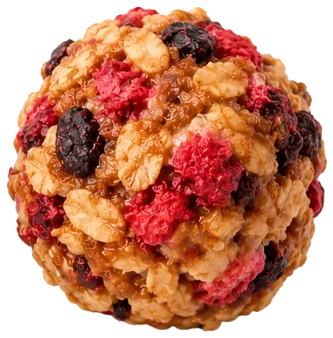
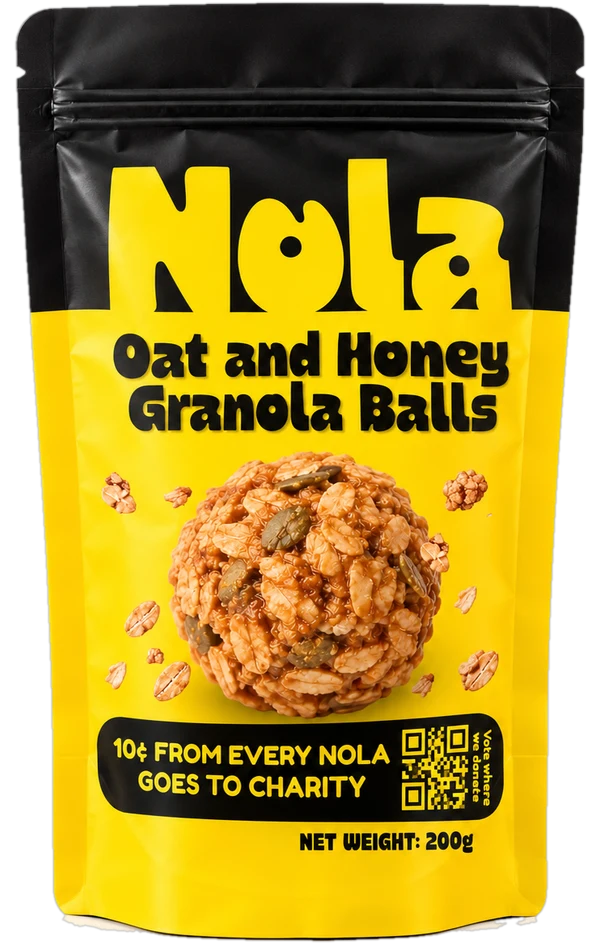
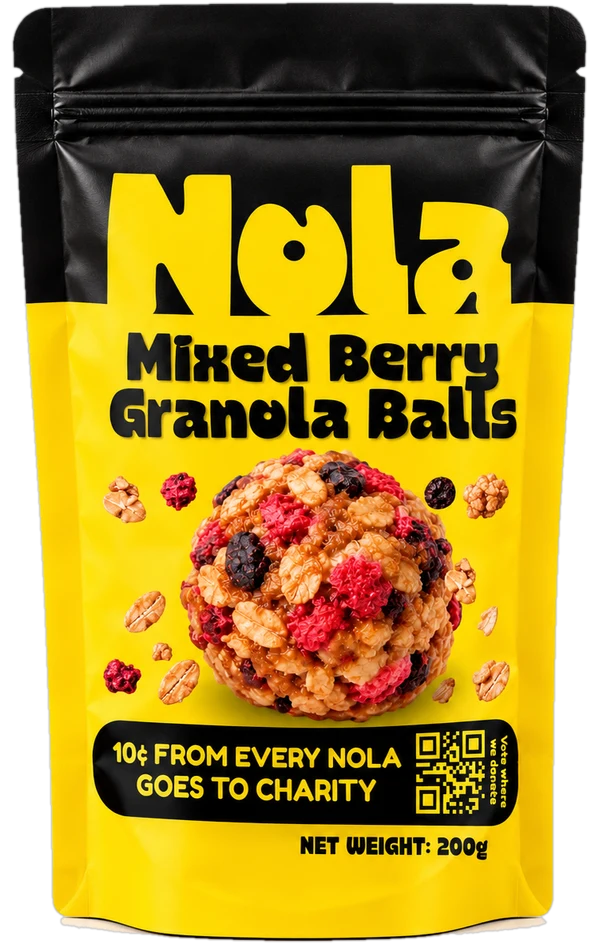
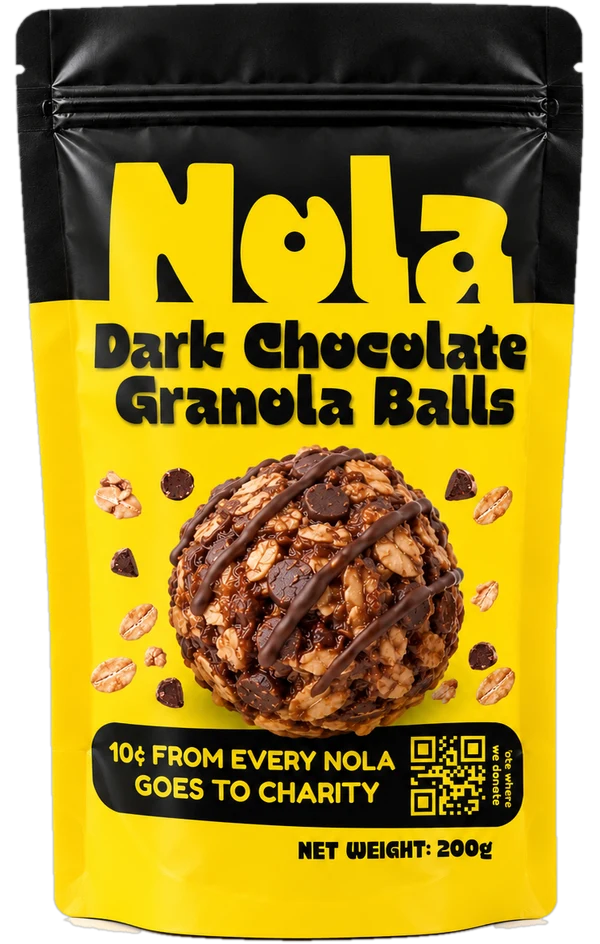
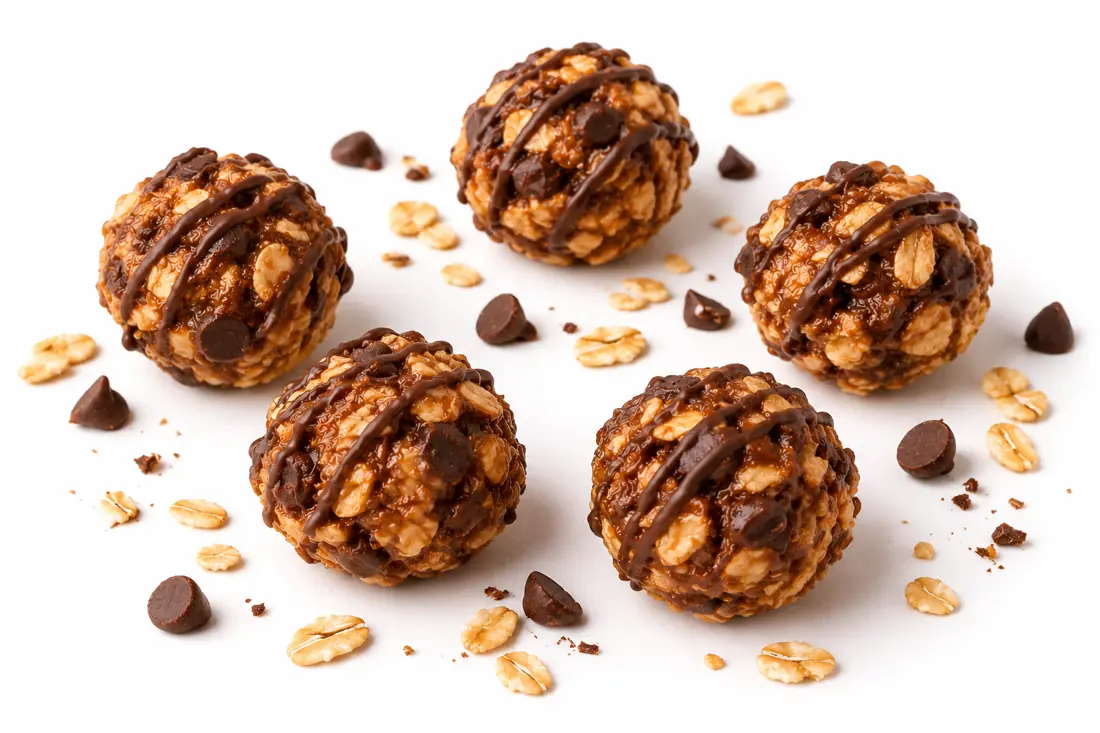
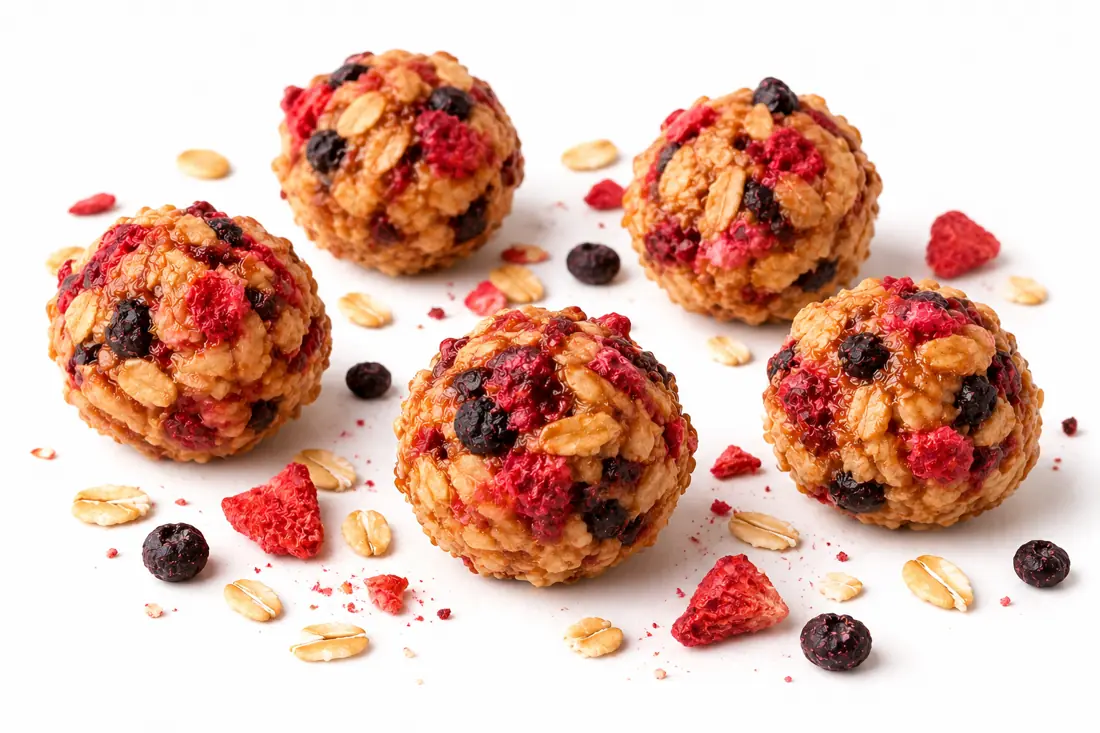
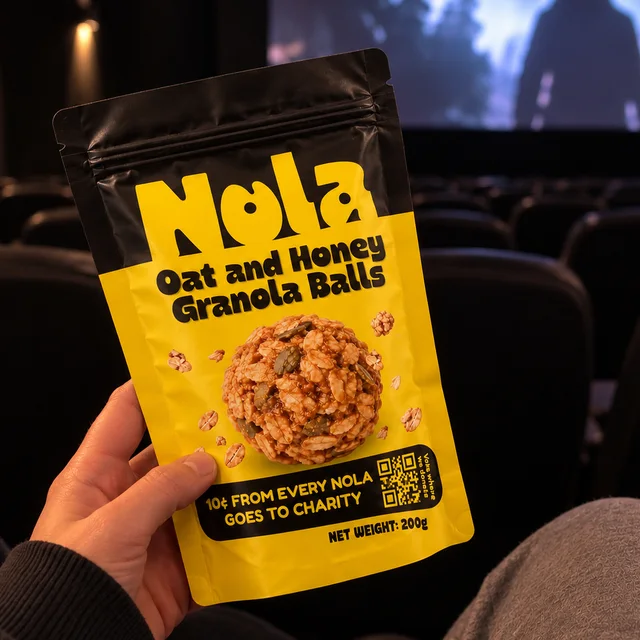
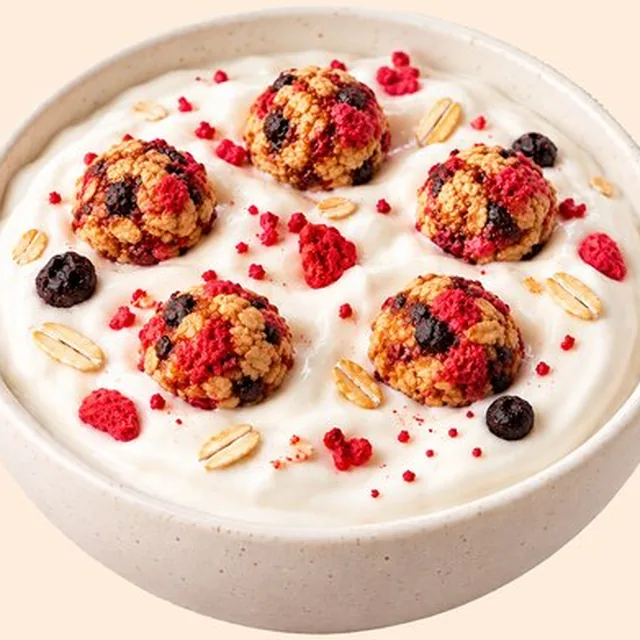
At Nola, our base is rolled oats, almond butter made from 100% almonds, honey and whey protein concentrate, finished with pepitas, chia seeds, vanilla extract and a pinch of sea salt. The Dark Chocolate and Mixed Berry bags build on the same base.
How are granola bites different from granola bars?
A granola bar is usually baked or pressed into a flat slab, then cut and wrapped one by one. Bars often rely on glucose syrup or other syrups to stay firm on a shelf, and a single bar is a single serve. Granola bites are rolled rather than sliced. That shape means you can eat one or two as a small snack or four as a full serve, and you can share a bag without breaking anything in half.
The round shape also changes the texture. A ball has more surface for the outside to firm up while the centre stays slightly soft, so you get crunch and chew in the same mouthful.
Are granola bites the same as protein balls?
They overlap, but they are not the same thing. Protein balls are often made from blended dates, nuts and a large amount of protein powder, which gives them a dense, fudgy texture. Granola bites keep the oats whole, so they look and eat more like granola. Some granola bites, including ours, add protein so that a serve lands around 8g, which puts them close to many protein snacks without the chalky taste that heavy protein powder can bring.
What should you look for on the label?
Turn the bag over and check four things. First, the ingredients list: ingredients are listed from most to least by weight, so oats or nuts should be near the start. Second, the protein per serve, which tells you whether the snack will actually keep you full. Third, the serving size, because some brands use tiny serves to make the numbers look smaller. Fourth, the allergen statement, since most granola bites contain gluten from oats and many contain peanuts, tree nuts or milk.
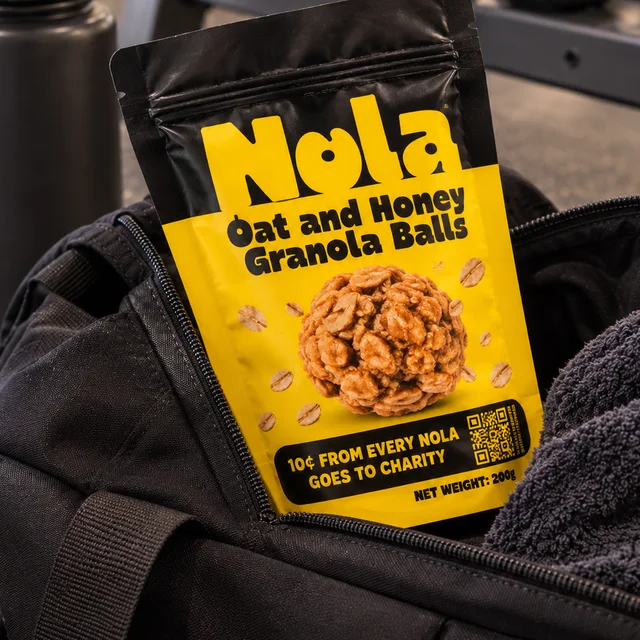
For reference, a 50g serve of Nola Oat and Honey, which is four balls, has 956kJ, 8.4g of protein, 10.3g of sugars and 3.9g of dietary fibre. The full panels for all three flavours are on our Flavours page.
When do people eat granola bites?
Because they are small and need no preparation, granola bites fit almost anywhere in the day. Common moments include breakfast on the go when there is no time to sit down, a snack after training, something to get through the mid-afternoon slump, a lunchbox filler for uni or work, and a sweeter option after dinner that still has some protein in it.
The short version
Granola bites are the crunchy part of granola, rolled into a snack you can carry. Look for a short ingredients list, a sensible serving size and enough protein to be worth eating. If you want to try them, The Trio gives you one bag of each Nola flavour.
Frequently asked questions
Are granola bites healthy?
They can be a good snack when they are made from whole ingredients like oats, nut butter and seeds and contain a decent amount of protein and fibre. As with any snack, portion size matters, so stick to the serving size on the bag.
How many granola bites should I eat?
Check the serving size on the pack. For Nola, one serve is four balls, or 50g, which gives about 8g of protein.
Do granola bites contain gluten?
Most do, because oats contain or are often contaminated with gluten. All Nola flavours contain gluten, oats, almond and milk.